[WARNING: THE FOLLOWING CONTAINS SPOILERS FROM "GAME OF THRONES"]
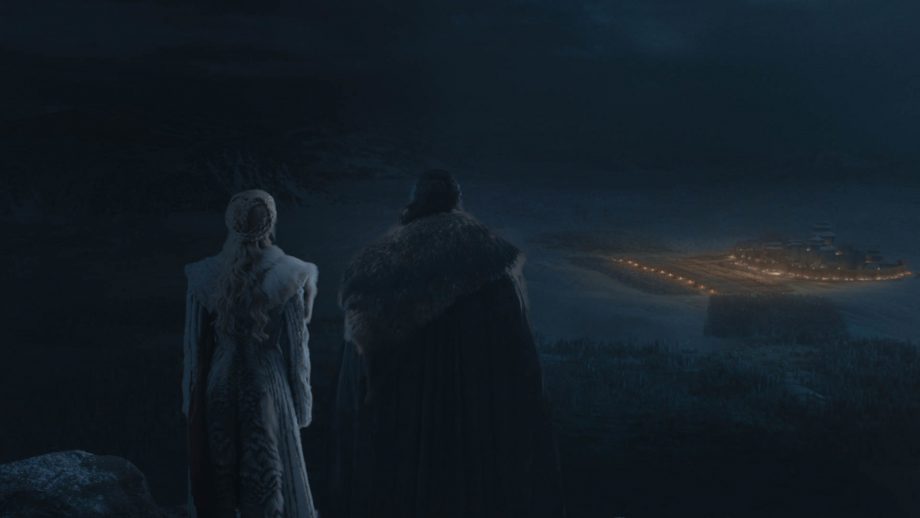
Sunday night’s “Game of Thrones” episode may have been “too dark” to watch for many fans, but the cinematographer insisted it wasn’t his fault.
Fans took to social media to slam the popular HBO series for making the lighting during the Battle of Winterfell in Season 8, Episode 3 “too dark.” Several people said they missed key events and were forced to rewatch scenes because they couldn’t decipher what was happening due to the dark cinematography.
Fabian Wagner, the cinematographer behind “The Long Night” episode, told TMZ he is aware of the complaints but insisted he isn’t at fault.
"We tried to give the viewers and fans a cool episode to watch," Wagner said. "I know it wasn't too dark because I shot it."
A scene from "The Long Night."
(HBO)
Wagner said the dark lighting was intentional, but believed HBO’s video compression of the episode decreased the visual quality, causing added pixelation and darkened colors. He said this was worse for those viewing the show on a streaming service with a weak connection or in a well-lit room.
"[‘Game of Thrones’] has always been very dark and a very cinematic show" that should be watched in a dark environment, Wagner told TMZ.
Fabian, who has worked on other popular episodes such as the "Battle of the Bastards," said fans should watch Episode 3 in a room that’s movie-theater dark, avoid streaming it on a phone or places that are too bright or adjusting the television settings.
Several viewers complained about the dark lighting during the Battle of Winterfell in Season 8, Episode 3.
(HBO)
Some viewers said they did adjust their brightness setting on their TV while others joked the episode was too much for their laptop to handle.
“#GoT #BattleOfWinterfell be like: [black screen],” a fan said.
“Y’all don’t understand I have to keep rewatching [the scenes] cause it’s so dark and so fast. And you don’t know who the f--- is going down…but you know our characters are fighting for their f---ing lives yo,” comedian Leslie Jones said in a video posted on Twitter with the caption, “UUUUGGGGHHH! It’s so hard to watch yo!!”
Another Twitter user joked, “BREAKING: HBO announces a Platinum Edition Director’s Cut that will include a #BattleForWinterfell version with better lighting for an extra $19.99.”
Frustrated by the dimly lit Battle of Winterfell on Sunday’s episode of “Game of Thrones”?
So, on Tuesday, late-night TV host Conan O’Brien provided a public service (of sorts) by asking his editors to brighten the nighttime scene.
The resulting (spoof) video was “kind of surprising,” O’Brien admitted.
Actually, it was rather Monty Python-esque ...
Check out the comedy clip here:
As for the actual “Thrones” battle, the show’s cinematographer Fabien Wagner has rejected criticism that it was too dark.
“A lot of the problem is that a lot of people don’t know how to tune their TVs properly,” Wagner told Wired. “A lot of people also, unfortunately, watch it on small iPads, which in no way can do justice to a show like that anyway.”
Warning: Contains stabby spoilers for Game of Thrones Season 8, episode three.
The Battle of Winterfell seemed to divide a lot of Game of Thrones fans. Plenty of people loved it. Others thought it was a bit disappointing. Some basically couldn't see it.
But despite your thoughts about the episode itself, one thing seems pretty easy to agree on: the outcome was certainly a surprising one.
Many people were expecting the Night King — who had been built up to be the show's ultimate adversary — to triumph at the battle. Not many predicted how, or when, he'd die.
Okay, so that stuff about the dragonglass is unconfirmed. But everything else — from Arya killing the Night King with the dagger to Bran knowing it was going to happen — is pretty much bang on.
The numbers for "The Long Night" include 12 million television viewers who watched on HBO at 9 p.m. Sunday night. The rest were viewers who watched an encore presentation, combined with those who streamed the show with the HBO Go or HBO Now apps.
"The Long Night" — which pitted the living against the dead in a great battle in Winterfell — was one of the most anticipated episodes of the series.
The episode was 82 minutes long and required 11 weeks of night shoots in Northern Ireland, where much of the series is filmed.
Social media lit up after the episode. Fans created memes, discussed plot points and even complained about the episode's cinematography online.
Some viewers noted that the episode's battle sequences, which were set at night in a blizzard, made it too difficult to make out what was happening on screen.
HBO also said on Tuesday that the season premiere has now been seen by more than 38 million viewers across HBO's linear and digital platforms when accounting for delayed viewing.
Spoilers ahead for Game of Thrones, season 8, episode 3, “The Long Night”
As Game of Thrones moves into the second half of its final season, we’re in the endgame — not just for the remaining contenders for the Iron Throne, but also for the behind-the-scenes string-pullers with their own grandiose plans for the fate of Westeros. Littlefinger’s cunning, Varys’ spy networks, Tyrion’s battle strategies, and Melisandre’s prophecies and fire magic have all been involved in manipulating and shaping the kingdom’s current chaos. But the show has not been friendly to any of its masterminds.
In the season 8 premiere, Varys, Tyrion, and Davos Seaworth watch Jon Snow and Daenerys Targaryen from a distance, musing over their suitability as a marriage alliance. “You overestimate our influence,” Varys says. “Jon and Daenerys don’t want to listen to lonely old men.” Tyrion protests, “Our queen respects the wisdom of age.” Varys quips back, “Of course she does. Respect is how the young keep us at a distance so that we don’t remind them of an unpleasant truth… that nothing lasts.”
Varys isn’t wrong about his own diminished social influence. In the past three seasons of Game of Thrones, as the show has diverged from George R.R. Martin’s sourcebooks, showrunners David Benioff and D.B. Weiss have relegated all of the advisers, sages, and prophets to the side, treating them as dusty old relics. The former schemers and pundits have laid out epic plans, but then they’ve consistently been sidelined and outsmarted by characters who are supposed to be less witty and observant, less influential and careful, or less crafty.
First, there’s Varys, whose purported goal was to improve the lives of common people and do what’s best for the realm. He served the Mad King, crossed over to help Robert Baratheon and spy on Dany when she was a young girl, and finally declared his true allegiance to her as a just queen. He’s an extremely resilient man, with a network of child spies. But by season 8, Varys has ceased to have any hand in driving the plot. He’s barely even present. He’s taken a back seat to Daenerys, who does what she wants regardless of his counsel. He also loses the major kills he commits in the books, murdering Pycelle and Kevan Lannister to protect Tyrion. In the show, Qyburn kills Pycelle, and Cersei Lannister kills Kevan as part of her Sept of Baelor wildfire attack. It’s a cleaner version of the story, but it undermines Varys’ ruthlessness and commitment to his cause.
Part of this can be explained by the showrunners’ emphasis and focus on more physically active, traditional heroes like Jon Snow and Arya Stark. We’re running out of episodes, so if Varys has any elaborate plots left, they could only be addressed in a spinoff, a sequel, or, better yet, George R.R. Martin’s unfinished books. Varys gets no lines during Jaime’s trial, although court manipulation is one of his specialties, and he just barely survives by the skin of his teeth in the crypts. (Somehow neither he nor Tyrion anticipates that the crypts aren’t safe against an opponent who raises the dead!)
Over and over throughout the last few seasons, we’ve seen this pattern repeat: the showrunners keep their prophets and geniuses dull and unaware to make it easier to spring surprises on the audience. That’s why the Night King can survive fire, defying the story’s established rules for the undead. It’s not because of some secret history; it’s because surprises make for startling entertainment. This isn’t a huge grievance, but it’s worth mourning, for a moment, the metaphorical death of George R.R. Martin’s smarter characters.
Martin has said in interviews and on his LiveJournal that Tyrion is his favorite character and that he takes great pleasure in crafting dialogue for him, but it takes time. After season 5, the showrunners had to improvise their own glib lines for Tyrion, which leads straight into him making familiar gibes at Varys for not having balls. What’s worse, Tyrion consistently underestimates his sister Cersei and falls for her lies. He gives Daenerys awful advice that betrays her allies and the story that she rightly ignores. He spends all of season 7 consistently failing and moping, perpetually helpless and on the sidelines as terrible things happen.
His failing wits and charm aside, the utter failure of his former military acumen is the narrative blunder that feels most out of character. Fans havetakenissue with Tyrion’s advice to Daenerys not to march on King’s Landing or at least lure out Cersei’s forces in season 7 in a battle that would have avoided civilian casualties. His decisions might not make strategic sense, but they’ve helped the showrunners delay the epic battles until Game of Thrones’ final season, keeping Cersei alive to increase tension. They just came at the cost of Tyrion’s logic and common sense.
Then there’s Melisandre who was totally underwhelming in fulfilling her final prophecy. She told Varys in season 7 that they’ll both die in Westeros, and in season 8’s massive battle in “The Long Night,” she tells Davos not to bother killing her because she’ll be dead by dawn. Both lines imply she’ll have some sort of epic death, and that the prophecy of the Prince that Was Promised, aka Azor Ahai, will be complete. That isn’t exactly what goes down.
In season 8, the Azor Ahai prophecy basically falls apart. According to prophecy, there should be a hero “born again amidst smoke and salt” who wakes “dragons out of stone.” The description sounds like it could apply to Jon or Daenerys, but Melisandre and Beric, who are both servants of the Lord of Light, give up their lives in order to keep Arya alive to slay the Night King. Her parting words to Arya are more or less, “Hey, you killed some blue eyes, just like I said you would.” So maybe Azor Ahai doesn’t matter so much? In the season 6 finale, Melisandre tells Jon Snow, “I’ve been ready to die for many years. If the Lord was done with me, so be it, but he’s not.” Yet, without looking for a clear sign that the lord was done with her, without resolving Westeros’ ongoing battles, without explicitly fulfilling the terms of her prophecies or explaining what’s going on, without even mentioning where she went for two seasons, Melisandre voluntarily ends her life by walking off into the distance and disintegrating into dust.
The highly unsatisfying conclusion to her storyline indicates that either Melisandre and other Red Priestesses of the Lord of Light were all wrong, or that the showrunners are just chucking out this piece of Game of Thrones lore in favor of focusing on more popular characters.
Melisandre’s seemingly random, anticlimactic death isn’t the first time the show has disposed of someone with the long game in mind. Petyr Baelish, better known as Littlefinger, was also poorly served by the writers over the course of seasons 5 through 7 before he met his untimely demise, which hasn’t happened in the books yet. A lot of it has to do with plot choices. Sansa didn’t have much to do in the later books, besides hanging around the Vale, so the showrunners gave her Jeyne Poole’s storyline, with Littlefinger arranging for her to marry sadistic murderer Ramsay Bolton.
This adaptation choice unfortunately made Littlefinger look stupid. Apparently, he didn’t have any idea what sort of a person Ramsay was or that he was putting Sansa in the hands of a bloodthirsty rapist. He eventually admits to Sansa that he made a mistake, but it’s hard to swallow, given Ramsay’s outsized behavior and how clever and aware Littlefinger is supposed to be.
In the books, Littlefinger instead offers to marry Sansa off to his heir, Ser Harrold Hardyng, who’s a mild jerk. But he’s no human-hunting, victim-flaying Ramsay Bolton, and he’s under Littlefinger’s control. We also know less about Littlefinger’s end goals in the books, and the added sense of mystery means he might have a pivotal role in the endgame. The show’s version of Littlefinger is a slimy weasel who ultimately tries to clumsily pit Sansa and Arya against each other. He deserves his execution for his sloppiness alone. But he’s also written as a straightforward schemer who is out to grab as much power as possible and seat himself on the Iron Throne. In some senses, he’d become too boring and basic to keep around.
It’s ridiculous to expect the showrunners to devote any sort of time to developing their geniuses and prophets when they only have three episodes left, especially since they seem to want to devote them all to straightforward action and romance. Unfortunately, for the sake of building up battles and putting Arya, Sansa, Daenerys, and Jon Snow in the spotlight, the puppetmasters pulling the strings have been cut off. The resulting simplicity is a blow to a longform story that likely wouldn’t have commanded this much attention if it had always been this uninterested in its undercard players. Stories as varied as Westworld, Avengers: Endgame, and Naruto bring in audiences with the sense of grandmasters playing 4D chess with the world. Exchanging that for easy thrills and sleight-of-hand tricks feels like a quick, boring victory after a long, worthy buildup.
We still have one prophet left on the center stage: Bran Stark. He didn’t do much during the Battle of Winterfell, except sightseeing as some crows and failing to pass along any useful intel to his allies. But he supposedly sees fragments of the future and is guiding everyone else along the journey. Given how poorly every other fortune-teller and chessmaster on this show has been treated, expectations for Bran shouldn’t be set too high. But he does have some major advantages. He’s a Stark, and his proximity to the other main characters might give him plot armor so he isn’t killed off. His powers could keep him safely on the sidelines. The story has said his death would be disastrous to humanity — it was the Night King’s stated goal — and with so much effort made to preserve him, he probably won’t die anytime soon. Best of all, he’s one of the key people vouching for Jon Snow’s identity as the true heir to the Iron Throne. All of this might just be placing a target on his back, but it could also suggest he’ll actually be relevant in the upcoming chain of events.
Hadestown was nominated for 14 Tony Awards, including one for best musical and another for best leading actress in a musical (Eva Noblezada, center). The awards ceremony is scheduled for June 9.
Matthew Murphy/Courtesy of Hadestown, The Musical
hide caption
toggle caption
Matthew Murphy/Courtesy of Hadestown, The Musical
The 2018-2019 Broadway season hurtled to a close, with 14 plays and musicals opening in March and April, before the Tony Award nominations were announced on Tuesday morning. And some of the late entries into the race were handsomely rewarded.
Hadestown, a retelling of the Orpheus and Eurydice myth by singer-songwriter Anaïs Mitchell, opened just two weeks ago and took 14 nominations, including one for best musical. Another recent entry, a reworking of the 1980s film comedy Tootsie, took 11 nominations, also including best musical.
Rounding out the best musical category were a jukebox musical, Ain't Too Proud: The Life and Times of the Temptations, with 12 nominations; an adaptation of the film Beetlejuice, with eight; and an original musical, The Prom, with seven.
Santino Fontana (center) stars in Tootsie, one of the productions up for the Tony Award for best musical. Fontana is also nominated for best leading actor in a musical.
Matthew Murphy/Courtesy of Tootsie
hide caption
toggle caption
Matthew Murphy/Courtesy of Tootsie
One of the biggest surprises of the season was the sheer number of new plays produced on Broadway: 14. Best play may be the hardest Tony category to predict.
Two popular plays also captured several nominations, but not for the top prize. Aaron Sorkin's adaptation of Harper Lee's To Kill A Mockingbird, starring Jeff Daniels, received nine nominations, and an adaptation of Paddy Chayefsky's Network, starring Bryan Cranston, got five. Both of those lead actors were nominated in the best actor in a play category.
The best play revival field is particularly strong, with The Boys in the Band,The Waverly Gallery, All My Sons, Burn This and Torch Song all up for top honors. And only two musical revivals were eligible for best musical revival: an avant-garde staging of Rodgers and Hammerstein's Oklahoma!, which received eight nominations in total, and a revised version of Cole Porter's Kiss Me, Kate, which took four.
In addition to Daniels and Cranston, several big stars were nominated for top awards, including Adam Driver in Lanford Wilson's Burn This, Annette Bening in Arthur Miller's All My Sons, Elaine May in The Waverly Gallery and Kelli O'Hara in Kiss Me, Kate.
Some other stars were left out of their categories, including Glenda Jackson, who won a best actress Tony last year and starred in King Lear this season, and Nathan Lane, who leads Gary.
The Tony Awards will be presented on Sunday, June 9 at 8 p.m. Eastern time. The ceremony will be hosted by James Corden at Radio City Music Hall and broadcast on CBS.
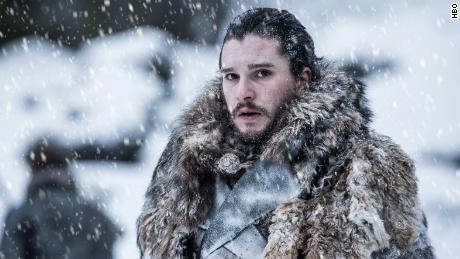
It's Team Human, led by Jon "Oh, geez, this isn't going well" Snow...
HBO
Versus Team Undead, led by a formidable tactician who perhaps got a bit too cocky trying to relish the moment as he went for the final prize. Don't get cute on the one-yard line, Night King.
Warning: This story contains plot points and spoilers for the latest episode of Game of Thrones, S8E3's Battle of Winterfell.
Halfway through the last season of Game of Thrones, we put together an after-action analysis of the major military engagements driving the plot of the series in the season's two central episodes—"The Queen's Justice," in which the forces allied against Queen Cersei got seriously pasted, and "The Spoils of War," in which Daenerys Targaryen, her dragons, and her Dothraki rapid response force swept down on the Lannister army's wagon train and turned it into a macabre cookout.
Now we're halfway through the final season of the series, and we're at a similar pivot point. The second episode of the season—"A Knight of the Seven Kingdoms"—laid out the somewhat awful strategic position of the combined allied forces under the command of Daenerys Targaryen and her Warden of the North, lover and likely nephew Jon Snow. And in the most recent episode—"The Long Night"—that situation reached its climax and conclusion in what could set the record for the least number of photons registered in a film or video production of its length ever.
As we were writing this, we were beaten to the punch by one of our favorite military Twitterati and bloggers, Angry Staff Officer, a master of fictional tactical interpretation, in his excellent but perhaps slightly misguided analysis for our sister publication, Wired. It's definitely worth reading, and you should do so right after you read this—unless you have not seen the episode and are averse to spoilers. In that case, come back and read both once you're ready.
Situational awareness
Enlarge/ At first (like the first two minutes), it seems we have a steady human set of hands at the wheel...
HBO
Dany's Dothraki and Unsullied forces, Jon's army of the North, the remaining Night's Watch, the remnants of the Brotherhood Without Banners, and a sundry assortment of other good guys face a dire strategic situation to start. The Night King and his mega-army of risen dead people have them outnumbered; he can challenge their air superiority with his own undead dragon and proven anti-aircraft spear; and instead of getting reinforcements from the double-dealing Queen Cersei, they get a one-handed man famous for pushing a kid out a window and siring kids with his sister.
At their command post in Winterfell, the collected leaders looked at the bleak situation and laid out their battle strategy: hold out as best as possible while luring the Night King into a single combat situation using warg raven/drone operator and cryptic intelligence provider Bran Stark (that kid who got pushed out the window) as the bait. Then they mostly get drunk and wait for the onslaught, until forward scouts signal that the enemy is near. But other than toots on a horn, Dany's leadership has absolutely no battlefield situational awareness. It's like they don't have any sort of flying thing that could do reconnaissance or something.
While scouts have given a rough estimate of force composition and the order of battle is pretty well-known, there's pretty much no operational picture—and pretty much no television picture, either, as the director of photography chooses to present the first half of the episode mostly in various shades of black. As the battle approaches, flame priestess and general portent of doom Melisandre wanders up and provides some much needed lighting—giving the Dothraki cavalry some flaming swords to swing. Meanwhile, non-combatants are withdrawn to the super-safe crypt, surrounded by dead people who could be raised by the Night King. Nobody seems to think twice about this, not even Dany's supposedly savvy advisors Tyrion and spymaster Varys—but we've seen them fall flat on their faces before in the foresight department, so that's not a shocker.
Dany and Jon watch from a mountaintop vantage point, awaiting their cue to deliver air support. They can't see much of anything. But somebody eventually does, as the Dothraki charge the unseen White Walker line.
There has been a lot of criticism of the Dothraki cavalry charge. But we are here to say that the criticism should be focused on the lack of close air support. In "The Spoils of War," the Dothraki served as a "fixing force" to line the Lannisters up for mass destruction from the air. Here, the Dothraki are literally lighting the way to the enemy, and all they have is some artillery support in the form of catapulted flaming tarballs.
Had this illumination been used for, say, some timely dragon strafing by Dany while Jon flew combat air patrol above, the Dothraki sacrifice may have been considerably smaller. Instead, we just get to see their flaming swords extinguished by the advancing line of we don’t know what.
The primary failure of the Dothrakis' use as a shock force was that they ran into an enemy (literally) that could not be shocked. Hopefully there are enough of them left to play a role in the next engagement.
The Dothraki charge was just another example of how utterly unimaginative Dany's supporting staff have been in the face of new challenges. As the returning Dothraki retreat back to Winterfell, we get a good look at another major failure of imagination—the defensive works around the castle, which are, to be honest, embarrassing even from a medieval tactical perspective. While the defenses may have been rushed a bit, it's hard to believe nobody remembered that the enemy's main body was a relentless, berserker undead infantry. Winterfell's outer defensive works were:
A line of chevaux-de-frise—spiked anti-cavalry fortifications akin to tank traps
A trench filled with stuff that burns
That's it. There were no other engineering efforts made. There was no effort to use the moving mass of the Walkers against them, using stake walls or other defensive structures. There could have been concentric trenches. Nope. And the Unsullied and Dothraki and everyone else on the field before Winterfell had to retreat through the defenses, causing higher losses.
Sure, all of this would have taken time and resources. But even a little more effort could have bought more time. Unfortunately, this bit of tactical and strategic fail is often reflected in reality, where commanders go into battles thinking the enemy will just fight them by the rules they already know.
Combined arms… and legs
Enlarge/ When in doubt, have a witch light a bunch of trenches on fire.
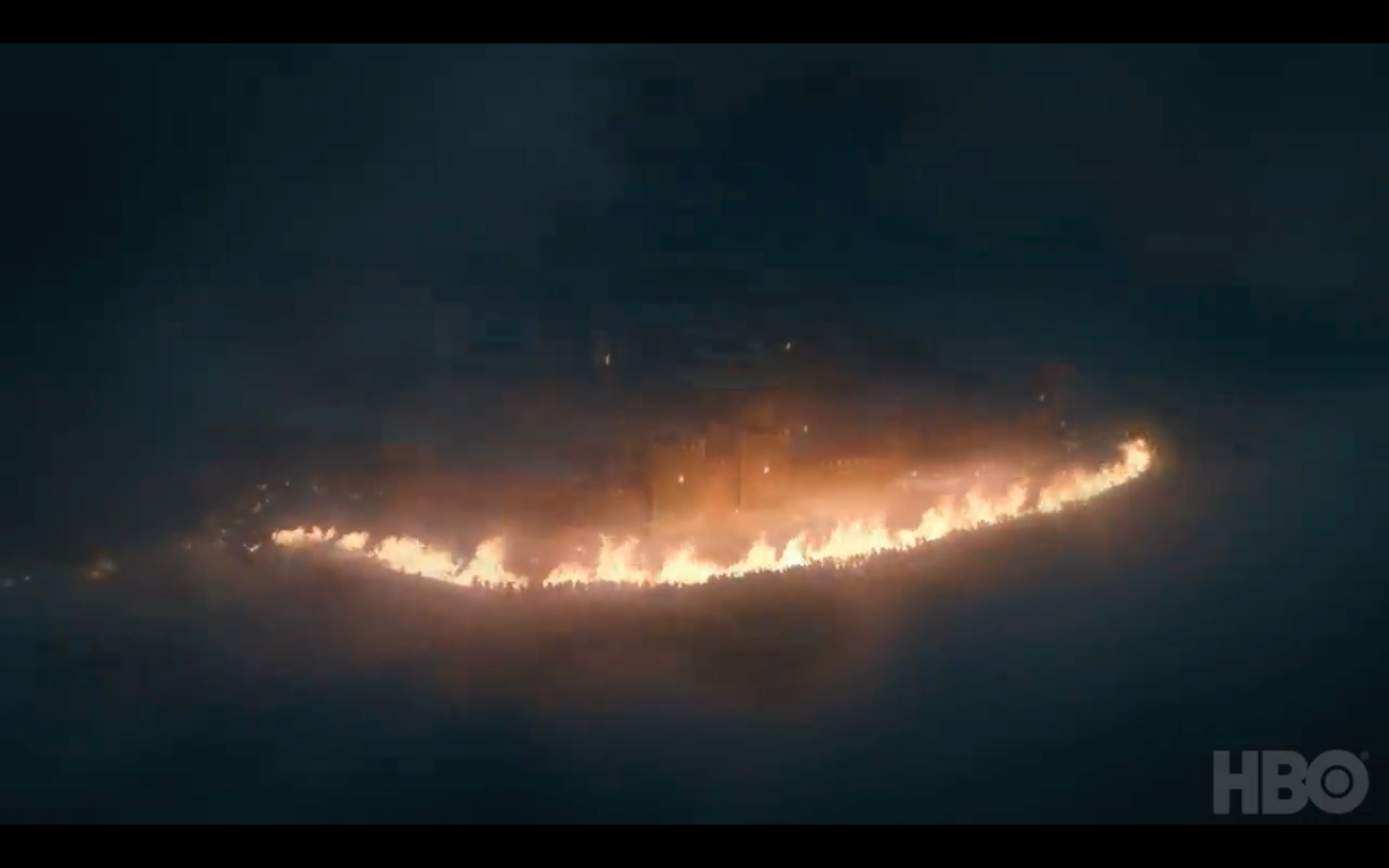
Command, control, and communication is essential on the battlefield. But the Night King essentially jammed Winterfell's C3 efforts by bringing on a literal fog of war—masking the battlefield with Winter itself. Davos Seaworth waves those flaming sticks to signal to Dany to dragon-flame the trenches alight, but she can't see anything through the low deck. Fortunately (?), Melisandre goes out and does her thing one more time, setting the trench alight.
And then everybody just stands there and watches each other. All the catapults are outside the walls and the trenches. All the archers sit on their hands as the Walkers pause at the wall of flame. Another opportunity to thin the (easily replenished) ranks of the dead.
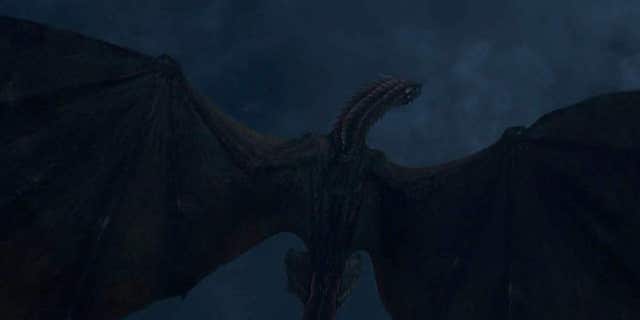
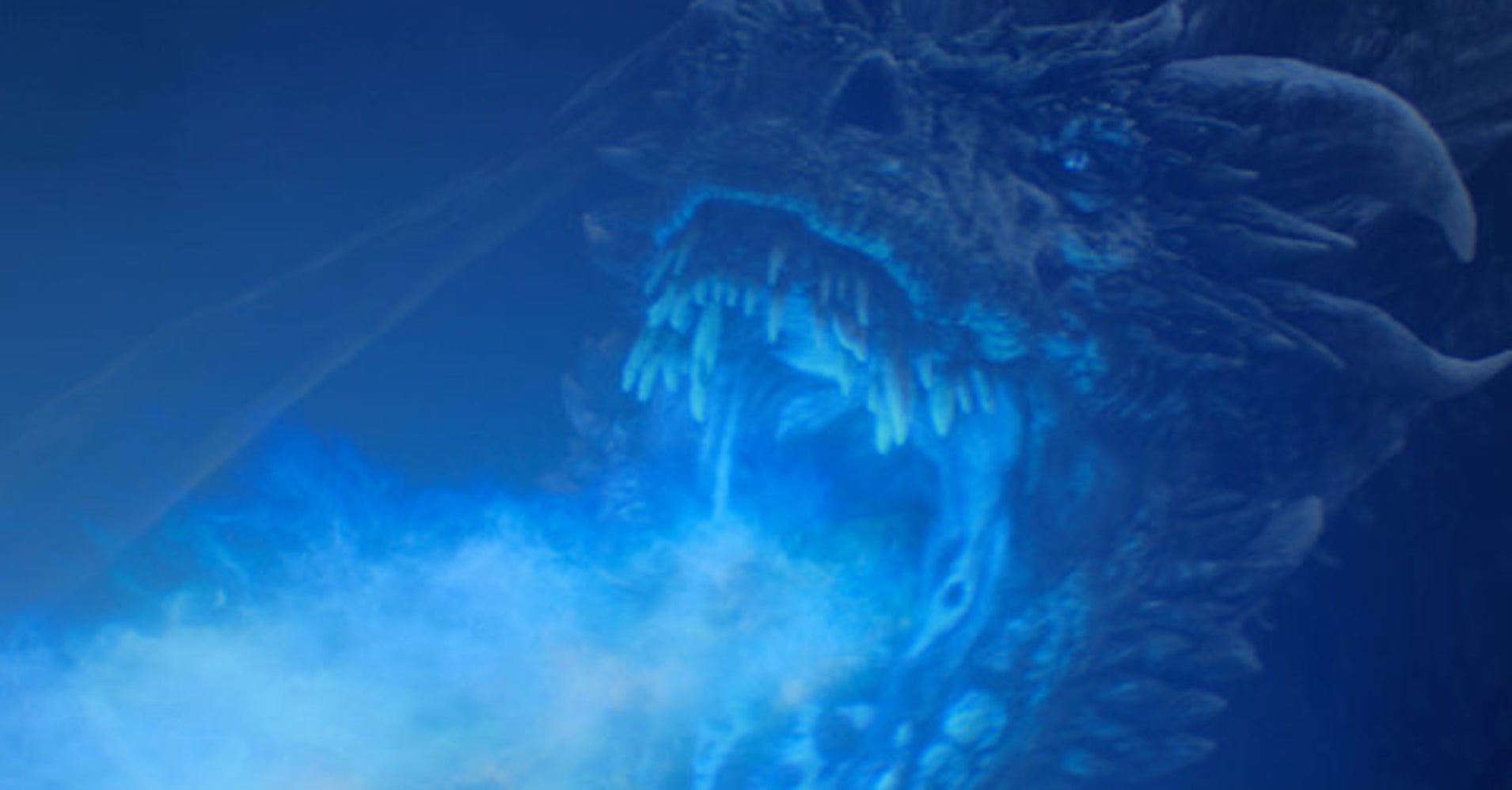
Meanwhile, Dany and Jon get tangled up in an air-to-air engagement with the Night King, astride his zombie, blue-fire spitting dragon. The Night King has failed to master the use of air power: he could have ignored Jon and Dany and just leveled Winterfell's walls with airstrikes like he did to that Other Wall, but nah. He obviously has no understanding of air-to-air tactics and attempts an attack from below—only to end up entangled with one of his targets. Both the Night King and Jon end up un-dragoned, their reptilian aircraft left to their own devices.
But this is not an apparent problem for the Night King, who has psychic C3 over his minions—and is able to raise all the dead around him as reinforcements. Dany tries to toast the Night King with dragon fire, but it's super-ineffective.
The Night King directs his dead troops to breach the burning barrier in a style reminiscent of World War I trench warfare (or, as Angry Staff Officer put it, "Soviet style")—by throwing their bodies down as a bridge over the obstacle. Suddenly, the lines are not so static. The walls are breached World War Z style by the masses of White Walkers. As the battle rages inside the walls, the Night King strolls into Winterfell with his squad of frozen bros.
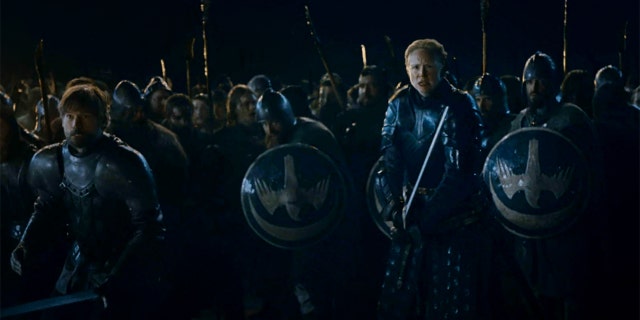
Then, there is a lot of dying. Jon finds himself tied down by zombie dragon fire. Dany is defended to the death by Jorah Mormont after her dragon gets weighed down by White Walkers. Theon Greyjoy and a band of archers defend Bran at the bait-point to the end, before Theon is dispatched with his own spear by the Night King. It looks like this is the end… until Game of Thrones' ultimate special warfare operator, Arya Stark, arrives and dispatches the Night King with some really slick Valyrian steel dagger work. The King crumbles, and his minions all collapse. It's like a proton torpedo down the exhaust port. The end.
It's a win, at huge costs—one that considerably weakens Dany's fighting force for the coming battle with Cersei's mercenary reinforcements and fleet. But the win shows that the basic underlying strategy mapped out by the leadership was correct—even if the execution left much to be desired.
In the end, we believe that the Battle of Winterfell played out much as most military conflict does. Success in combat often hinges upon the determination, imagination and ability to adapt and overcome in the face of situations that soldiers haven't trained for. The enemy will not always conform to your tactical paradigm. And fortune favors the bold.
If you want the show's writers to justify the action of team human, HBO's latest behind the episode video does just that.



:format(webp):no_upscale()/cdn.vox-cdn.com/uploads/chorus_asset/file/16202113/f36185aa337ded26b89a48291055c9bcac5e6ca9a390e6885adc4ac9ef5923332fe4ad14640ca3d030464e31f5021d27.jpg)
:format(webp):no_upscale()/cdn.vox-cdn.com/uploads/chorus_asset/file/16200659/061a76cb321c8db0782c012a77c5f6c7a502cd17c9882c5aa3a8f5d23c6ea4ad8d6c4bb2216e25cc042c40479e598f22.jpg)
:format(webp):no_upscale()/cdn.vox-cdn.com/uploads/chorus_asset/file/16202023/07f91a6657d54dcafedf45a80fd942a4f060bbbfb33bd664c400fdb5a92bd730.jpg)
:format(webp):no_upscale()/cdn.vox-cdn.com/uploads/chorus_asset/file/16202028/5defa13615b7502d70fa93a448ba2a7630dabb7a9cf7ffaab8ef5ce26fa2d019c7ccc79e9a936502a7e6c06cb0a8a9ef.jpg)
:format(webp):no_upscale()/cdn.vox-cdn.com/uploads/chorus_asset/file/16200682/aac2eca45f84f31294b837acd67c4ebf113dee0f580271bcf47d15ca47599697535d7bd7e12fd0e37d19cd8c56686ad1.jpg)